Diraq Collaborates with NVIDIA on Hybrid Quantum-HPC for Utility Scale
Diraq's unique silicon-based architecture is scalable, economical, deployable, and powerful — and is drawing on the NVIDIA NVQLink platform.
SAN JOSE, CA – 18 March 2026 – Diraq, the Australian quantum-computing pioneer, today revealed how its silicon-based architecture is leveraging the NVIDIA NVQLink platform, creating a viable path to integrating utility-scale quantum computing with high-performance classical infrastructure in standard data centers.
Speaking at NVIDIA GTC 2026, Diraq CEO and Founder Andrew Dzurak explained why the fundamental advantages of Diraq’s technology make it ideally suited to the speed and parallelization capabilities of NVIDIA technology — and how NVIDIA technology is helping to transform Diraq's development timeline.
"Because we’re using silicon, Diraq's quantum computers are scalable, economical, deployable, and powerful," said Dzurak. "These technical attributes, combined with NVIDIA’s platform is allowing us to scale so effectively."
Data-Center Integration Unlocks Hybrid Computing
Diraq is building quantum computers by modifying the silicon transistors found in modern microchips to control quantum information in a property of electrons called spin. This approach enables the company to fit millions of qubits on a single chip, drastically simplifying the cooling infrastructure and making Diraq's quantum computers economical and energy efficient.
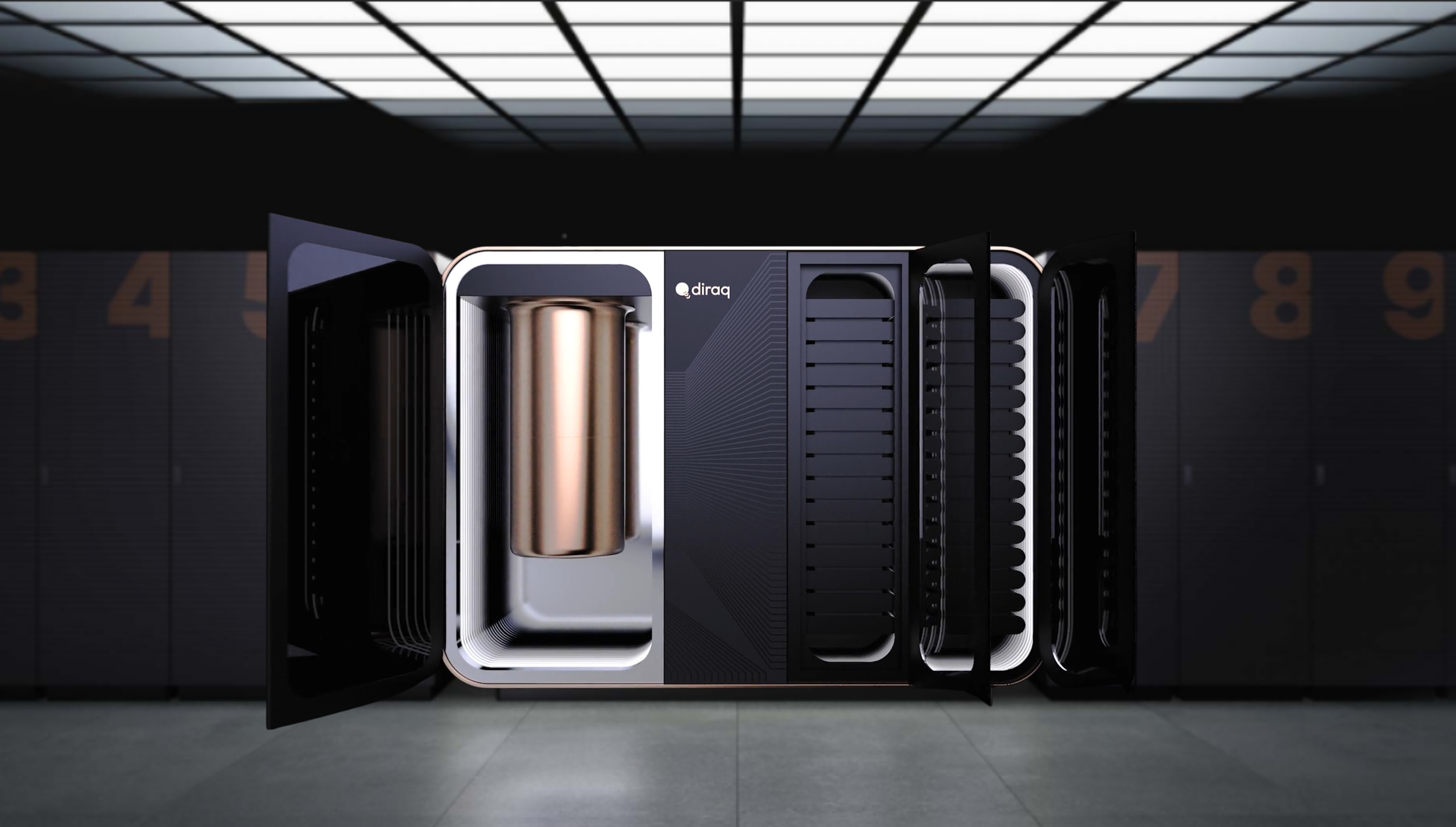
The first Diraq quantum computers will be in data centers later this year and the company’s first commercial product will appear in 2029. Diraq’s quantum processing unit (QPU) occupies approximately one server rack, making it easily integrated with high-performance classical computers.
"The true value proposition for quantum computing is in hybrid quantum–classical algorithms, so the deployability of Diraq's quantum computers is crucial," Dzurak emphasized. "Because we don't need colossal cooling infrastructure, Diraq's quantum computers are economical to produce and operate, and easily deployed in data centers across the globe."
This deployability is precisely why NVQLink integration matters. Diraq's compact architecture allows quantum and classical systems to be co-located, and NVQLink can facilitate the high-speed, low-latency communication required for hybrid algorithms.
NVIDIA's Speed Transforms Diraq's Development Workflow
Diraq's quantum computers are designed to perform one million error-corrected operations per minute, leveraging physical phenomena that are unique to electron spins. This MHz-speed operation is essential for practical applications.
Classical hardware must keep pace with quantum operations across multiple timescales — from logical cycles to device drift to spin noise. Using the NVIDIA Quantum platform to achieve the requisite speeds is accelerating Diraq's path to utility scale by fundamentally transforming the company's R&D process, creating faster feedback loops between simulation, design, and experimental validation.
This evolution is happening across Diraq's entire workflow:
Simulation: Most of Diraq's simulation stack is now running on NVQLink with GPU optimization.
Design: Accelerated computing is being used for critical aspects of qubit design including thermal management and fanout optimization.
Experiments: NVQLink enables calibration, autotuning and benchmarking studies directly in experimental workflows
"This will ultimately give rise to real-time digital twins, which we can use to learn about our system while it's in operation," Dzurak explained. The ability to simulate faster than physical experiments run — and to do so with massive parallelization — fundamentally changes how quickly Diraq can iterate toward utility scale.
"The fantastic thing is that our graduate students were able to easily optimize our workflow for NVIDIA accelerated computing, which offers tremendous prospects for parallelization,” Dzurak added.