Diraq charts course to utility-scale quantum computing with millions of spin qubits on a single silicon chip
In a new white paper, Diraq lays out how silicon spin qubits, CMOS manufacturing, and data centre-ready systems provide a path to millions of qubits on a single chip and commercially viable quantum computing.
Diraq today published The Case for Silicon, a new white paper setting out its architecture and roadmap for building commercially viable, utility-scale quantum computers using silicon spin qubits manufactured with CMOS-compatible semiconductor technology.
By bringing quantum computing into the same manufacturing environment that produces today’s advanced semiconductor chips, Diraq is developing a pathway to integrating millions of qubits onto a single chip and deploying quantum processors within existing data centre environments. Diraq is targeting a system with 150,000 physical qubits and up to 1,000 logical qubits by 2029, followed by more than 2 million physical qubits and more than 10,000 logical qubits by 2031.
Four requirements for utility-scale quantum computing
Progress towards commercially viable quantum computing needs to be assessed at the level of the complete system, bringing together physics, engineering, and economics.
Diraq identifies four requirements for commercially viable, utility-scale quantum computing that any quantum computing architecture must address simultaneously:
Scalable: A utility-scale quantum computer requires a credible pathway to millions of physical qubits. Diraq is targeting more than 2 million physical qubits on a single silicon chip by 2031.
Economical: Quantum computing must become more economical as qubit counts increase. Diraq is targeting a total system cost of less than $1 per qubit at scale, made possible by a compact system that keeps operating costs and energy consumption low.
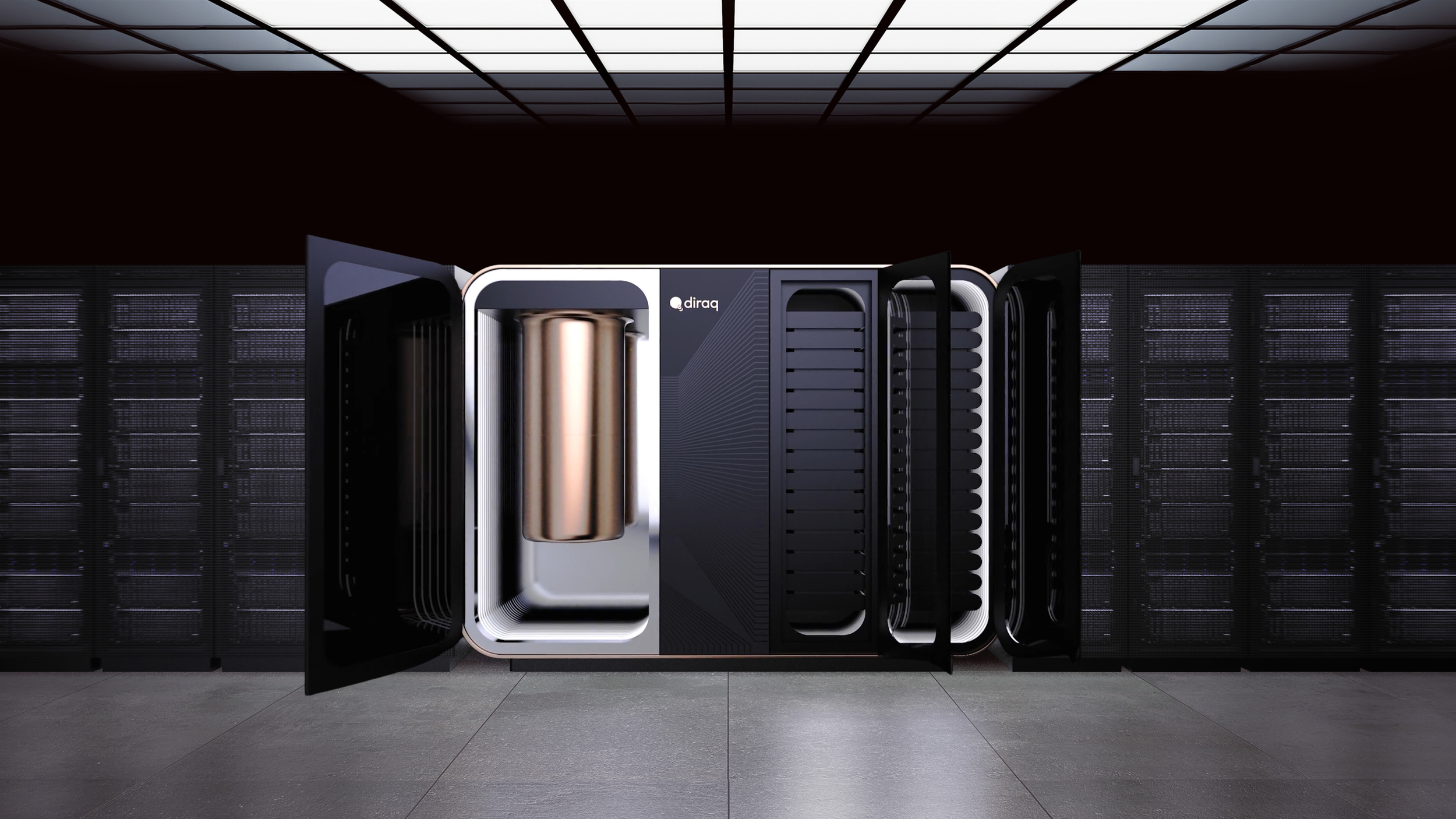
Deployable: Utility-scale quantum computers must integrate with existing computing infrastructure. Diraq is designing a fault-tolerant quantum processing unit to fit within a rack-scale cryogenic system and integrate with standard data centre infrastructure.
Powerful: Commercially useful quantum computing requires fast, error-corrected quantum operations. Diraq's architecture combines fast quantum logic with advanced error correction and is designed to enable one million error-corrected operations per minute.
"Scaling quantum computing isn't about a single breakthrough - it's solving for physics, engineering, and economics at the same time. Silicon is the only platform that answers all three,” says Andrew Dzurak, CEO and founder of Diraq. “It gives us a manufacturing path proven over decades, a cost curve that improves as we add qubits, and a system designed to run inside today’s existing computing infrastructure.”
With a pathway to millions of silicon spin qubits on a single chip, The Case for Silicon sets out how Diraq plans to build utility-scale quantum computers for deployment in today’s existing computing infrastructure. By combining scalable silicon quantum processors, CMOS manufacturing, low-cost operation, and data centre-ready deployment, Diraq is developing a path towards useful, commercially viable quantum computing at scale.