How full CMOS compatibility puts Diraq ahead of the pack

Walk around any quantum conference in 2026 and you'll hear the phrase ‘CMOS compatible’ at nearly every booth. So what does this phrase mean, and why is it so important?

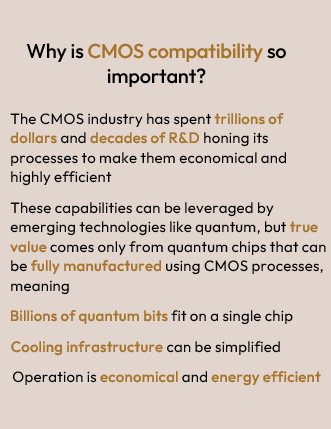
‍Five years ago, most quantum computing companies benchmarked their technology around qubit quality, gate fidelity, or algorithmic milestones. Some argued they would only ever need a few thousand qubits to provide usable quantum computing, which is below the threshold where manufacturing scalability becomes the defining challenge. But that narrative has shifted: it’s clear that we’ll need millions of physical qubits to derive sustained value from quantum computing. That has led to a focus on CMOS compatibility, and the change tells you something important about where the industry is heading.

‍It’s now clear that the relevant goal is utility scale: the point at which the economic value of a quantum computer outweighs its cost. Current research indicates that the most commercially valuable applications will require tens to hundreds of thousands of logical qubits. With current error correction protocols, this means millions of physical qubits.

‍More than 20 years ago, our founder Andrew Dzurak looked at the landscape of quantum computing research and realized that the existing technologies would not lead to commercially viable quantum computers. There was a disconnect between achieving quantum computing and scaling it in an economically viable way. The various modalities at the time had been pursued simply to prove that making a qubit was possible, using whatever physics happened to be convenient. They weren’t selected with the understanding that a useful machine would ultimately need millions of qubits.

‍Andrew's insight was that the only path to a deployable, economical quantum computer was to leverage existing CMOS processes. The industry at large now seems to agree, but it is yet to align on the most CMOS-compatible platform. Even within the pool of players working with spins, strategies differ — and so too does CMOS compatibility.

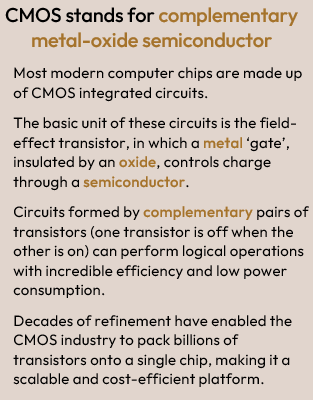
As our team lays out in a recent article in Nature Reviews Electrical Engineering, CMOS compatibility exists on a spectrum. At one end, you have the most generous possible definition: the ability to fabricate some component of your system using a silicon wafer as a substrate. At the other end, you have full co-integration, with qubits and classical control electronics manufactured together on the same chip, in the same foundry, using the same process design kit and the same set of tools that produce today's most advanced processors. At this level of compatibility, changing a factory’s output from classical computing chips to quantum chips involves the least amount of disruption or friction.

Andrew pursued silicon spin qubits because he knew that if you couldn't build a quantum computer using existing CMOS technology, you probably couldn't build a useful one at all. Other approaches have produced important science and impressive demonstrations, but they will struggle to achieve the scale, cost, and manufacturability needed for real-world deployment. Andrew’s conviction that full CMOS compatibility was the only path that could lead to widespread quantum computing has shaped every decision Diraq has made.

Diraq’s qubits are formed with modified transistors that are fabricated using the same planar metal-oxide-semiconductor geometry, the same polysilicon gates, and the same oxide layers that have been the backbone of the CMOS industry for decades.

In 2014, Andrew and his team at UNSW demonstrated the world's first CMOS-compatible silicon spin qubit, and in 2015, the first two-qubit logic gate in silicon. In 2022, he spun out Diraq to fund commercial R&D and manufacturing.

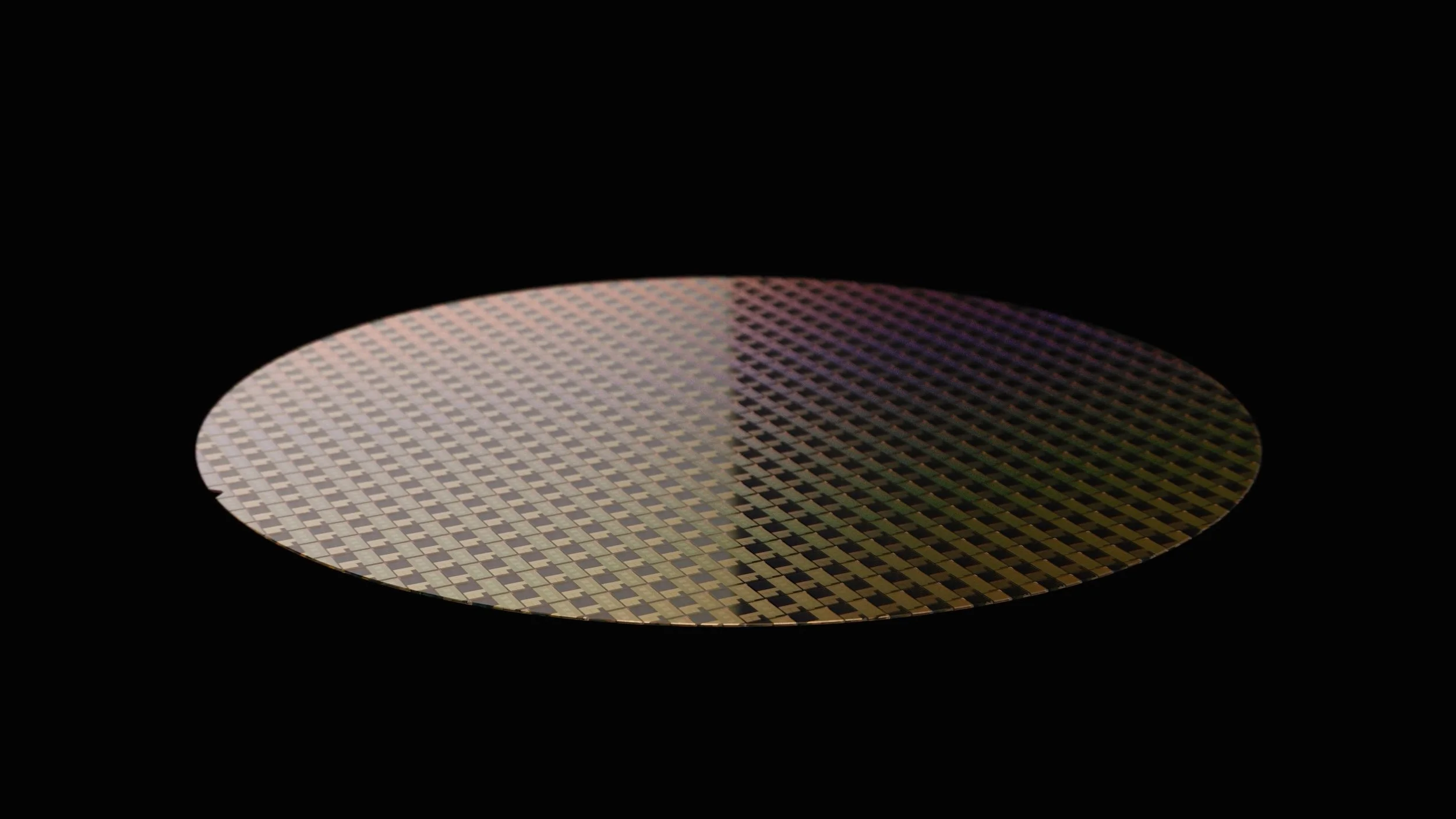
The decisive test came in September 2025, when Diraq and imec published results in Nature demonstrating that qubits fabricated on imec's 300 mm industrial pilot line — using standard semiconductor tooling, not bespoke academic equipment — achieved over 99% fidelity across all operations. Four separate devices on the same wafer, selected at random, all exceeded the fault-tolerance threshold and showed high uniformity compared to academic devices.

This result was only possible because the technology is truly native to the commercial manufacturing process.

Next
Next

Diraq ranked #1 corporate research institution in Australia by Nature Index